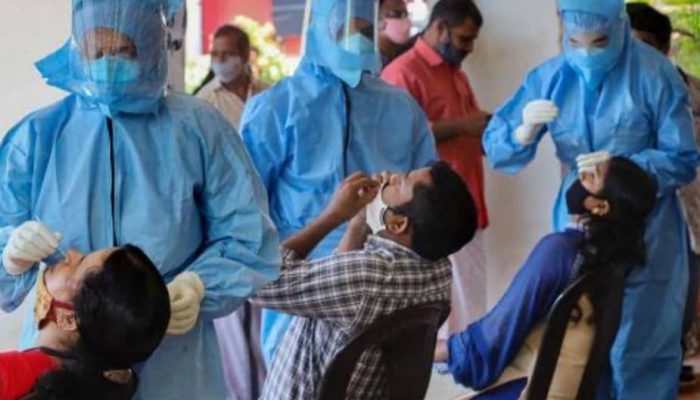

Amidst India’s unfolding Covid disaster, the southern Indian state of Kerala has been lauded for its effective response to the Covid-19 pandemic, particularly in controlling mortality.
As of June 2, Kerala, despite having the third highest cumulative case count in the country (9,60,000), had the second lowest death rate (.36%) with 3,508 fatalities. In contrast, the state of Delhi, home to some of the most advanced healthcare facilities in the country, recorded India’s highest death rate at 2.9% (the national average was 1.3%).
What are the factors that help explain Kerala’s record? This two-part analysis attempts to unravel the secrets of Kerala’s impressive performance against Covid, based on extensive interviews with key officials involved.
This is the first of a series of special reports to be published by Covid Response Watch to understand the social, administrative, historical and political factors behind the way different parts of India have tackled (or not) the Covid-19 pandemic.
Reproduced from www.countercurrents.org
Kerala was the first state to have a Covid case in India, when a student hailing from the state returned from Wuhan, the epicenter of the outbreak, with an infection towards the end of January 2020. At this stage, the only cases reported in India were in the state, which meant that Kerala had to come up with a strategy on its own, and quickly.
Rajeev Sadanandan, a former senior health official and advisor to the Kerala Chief Minister on Covid, says, “The countries that handled Covid best were those that had experience of dealing with an epidemic, as with Taiwan and SARS. In contrast, Western countries, which had very little recent experience handling infectious diseases, were doing badly. In the case of Kerala, the state’s experience of successfully handling the Nipah virus in 2018 came in handy. The key elements of our initial response – tracing, tracking and quarantining – were those we had developed during the Nipah outbreak.”
During the Nipah outbreak Kerala was praised for its speedy response, with political leaders taking direct charge of operations and also helping mobilize the community, all of which helped contain spread of the deadly infectious disease.
Planning and anticipation
One of the things that have stood out is the Kerala government’s planning and timely actions. Dr. Shinu K.S., a member of the state’s Rapid Response Team (RRT) – Covid, says, “From the time we heard about the Wuhan outbreak, the health department was on alert. As soon as the first case was reported in the state, we did our own projections of how the infection would spread, drawing up a plan of action, and setting up the Rapid Response Team.”
The state quickly set up separate committees to manage capacity building, infrastructure, treatment protocols etc. Training programmes for health department staff were initiated in all 14 districts as early as January 2020. Dr. Shinu further says, “With the third or fourth case, we had started contact tracing and preparing route maps based on the patient’s recent interactions, based on our Nipah experience. Initially, doubts were raised that we were overdoing things, but our projections clearly showed the danger ahead. Our understanding was that, in a fast-moving epidemic, “Anticipation is the best form of prevention.” Kerala being a state with high population density and large number of emigrants, we knew we were especially vulnerable.”
Sadanadan points to the early procurement of key supplies as another factor. “An efficient and alert procurement and supply system was put in place early on. For example, our procurement staff were in touch with the Serum Institute, Pune (the chief vaccine manufacturer in the country) when the vaccine was in development. Similar steps were taken at every front, be it PPE kits or oxygen.”
The foresight displayed by the administration was well in evidence during the second wave, when people were dying outside hospitals for lack of oxygen support, Kerala remained an oxygen-surplus state. This happened only because the state had acted early to increase its production capacity in anticipation of precisely this eventuality.
Unique strategy
Forced to deal with the earliest cases in India at a time when little was known about the disease and no clear model for response, Kerala had to evolve its own model, based on its own experience. This model was constantly revised on the fly, in the light of experiences and feedback from the field. All this proved to be a blessing in disguise, as it ensured that the state’s response was suited to local conditions and relied mostly on the state’s own resources.
The state now follows a decentralized, five-tiered, chain of referral system where patients are classified according to the severity of their symptoms, and are directed to appropriate facilities. Under this, patients with mild symptoms are asked to isolate themselves a home if they can meet the guidelines, and their status followed up by healthcare staff and frontline personnel called ASHA (Accredited Social Health Activists) workers.
Those who are unable to do this, as well as asymptomatic cases that have tested positive, are sent to Covid First Line Treatment Centres (CFLTCs), which form the second tier. These are temporary isolation facilities set up in hotels, community halls, stadiums and colleges, managed by Local Self Government bodies, and supervised by the nearest primary/family/community health centres or regional hospital. The CFLTCs are equipped with basic medicines, pulse oximeters, BP apparatus and other required medical equipment. The CFLTC set up in partnership with Bharat Petroleum in Kochi constitutes the largest temporary Covid treatment facility with oxygen support in the country, with 1500 beds.
Patients with moderate symptoms, and who may require more intensive treatment, are sent to Covid Second Line Treatment Centres (CSLTCs) in regional or district hospitals, while those with severe symptoms are sent to dedicated Covid hospitals or medical colleges for intensive care. Thanks to this five-tiered system, patients were managed in the right place, getting the right kind of treatment for their symptoms. Also, it ensured that most cases were managed in the periphery, or locally, without overburdening the centre. This in turn ensured that tertiary facilities such as the medical colleges catered exclusively to patients in need of critical care, which significantly helped reduce mortality.
Public health infrastructure
As is well-known, Kerala has some of the best public health infrastructure in India, starting with large state-run medical colleges, district hospitals in all district headquarters, and a network of primary health centres that cater to rural areas. This reflects the general progress the state has made in human development as well as steps taken by successive governments in strengthening infrastructure and building human competence (especially in primary health). All this gave the state an advantage when it came to handling an epidemic like Covid where the chief danger was that of medical facilities being overwhelmed, as it happened in Delhi and elsewhere.
Sadanandan says, “As the number of epicenters increased, the case count too started going up in Kerala, inevitably so given the state’s large emigrant population. However, once the lockdown was declared, and flights stopped and the borders were sealed, Kerala turned into an island. Once the infusion of cases from outside stopped, Kerala quickly proved that it could contain the infection within, through classic techniques in public health intervention. In fact, at one point, we brought the case count down to zero. In my opinion, it was here that the state’s public health system demonstrated its real strengths.”
However, another challenge lay ahead for Kerala, to meet the surge in cases once lockdown was lifted. Here, the state’s public health infrastructure again proved to be critical. Sadanadan says, “So far, we have not had a single case where a critical patient could not find a bed or get oxygen. This happened chiefly because of two reasons. First, the high per capita installed capacity in hospital beds and depth of infrastructure, which ensured that we had a high surge capacity. Secondly, the control rooms managed to distribute and direct the flow of patients and resources appropriately.”
(To be continued)
Sajai Jose is an independent researcher and freelance journalist based in Kerala