
One of the striking features of contemporary Indian politics is the growing predominance of identity as a basis of political mobilisation. Caste, religion, region, language, ethnicity, and other identities have become increasingly central to the way political interests are articulated and political constituencies are constructed.
There is nothing inherently wrong with identity politics. In a deeply unequal society, identity can be a language of resistance. Dalit movements have challenged caste oppression; Adivasi movements have defended land and community rights; women’s movements have confronted patriarchy; and minority movements have demanded dignity, equality, and security. For historically oppressed communities, recognition is not a luxury. It is an essential part of justice.
The problem begins when identity becomes the principal and sometimes the only way of understanding political interests. When this happens, an important question gets pushed into the background: What are our common material interests?
A Muslim worker and a Hindu worker may belong to different religious communities, but both may struggle with insecure employment, rising living costs, and inadequate social protection. A Dalit worker and an upper-caste worker may occupy very different positions within the caste hierarchy, while both may be affected by unemployment, precarious work, or the erosion of labour rights. A woman working for a platform company and a man doing the same work may experience gender differently, while sharing many of the same problems of algorithmic control, low bargaining power, and insecure employment. The differences are real. But so are the common interests. This is where class politics becomes important.
Class should not be understood simply as another identity—as though one has to choose between being Dalit and being a worker, or between being Muslim and being a worker. Class concerns one’s relationship to the production, distribution, and control of economic resources and to the structures of power surrounding work and wealth.
The material inequalities facing India today make this question difficult to ignore. The World Inequality Lab’s research has documented a sharp rise in income and wealth concentration in recent decades in India and shown that economic inequality is deeply intertwined with caste inequality. At the same time, the overwhelming importance of informal employment means that millions of Indians experience class not through a traditional factory workplace but through precarious livelihoods. The contemporary working class therefore looks very different from the industrial proletariat imagined in the nineteenth century. It includes construction workers, agricultural labourers, domestic workers, street vendors, migrant workers, sanitation workers, small producers, delivery workers, and app-based drivers.
The fragmentation of employment has also fragmented workers’ collective identities. This creates a major political challenge.
A politics organised entirely around identity can tell us: who we are? What is our caste, what is our gender, what is our religion, what is our language? Class politics asks another question: Where do we stand in relation to wealth, work, and power? And perhaps an even more important question follows: Who benefits from keeping us politically separated?
This does not mean that class automatically dissolves caste, religion, gender, or other forms of inequality. It does not. In India, class itself is shaped by caste, gender, region, and community. The distribution of wealth is not independent of social hierarchy. The task, therefore, is not to return to an old-fashioned version of class politics in which every other form of oppression is treated as secondary. Rather, we need a politics of intersection and solidarity—a politics that recognises differences while searching for common material interests.
The question should not be: Are you Dalit or a worker? Are you Muslim or a worker? Are you a woman or a worker? It should be: How do caste, religion, gender, and other identities shape your experience as a worker? And how can workers with different identities organise together against exploitation and inequality?
This is particularly important at a time when India’s economy is producing new forms of precarious labour. Platform workers provide a striking example. The delivery worker does not have to abandon his or her religious identity. The domestic worker does not have to abandon her caste identity. The street vendor does not have to stop being Bengali, Hindi-speaking, Muslim, Hindu, Dalit, Adivasi, or anything else.
But they can ask a different political question: What do we share?
We share an interest in decent wages, secure employment, affordable education and healthcare, social security, housing and public services, dignity at work, and, above all, some control over the conditions under which we live and work.
This is where class politics can become something more than an economic doctrine. It can become a politics of solidarity.
The Left, therefore, should not respond to the rise of identity politics by dismissing identity. Nor should it simply imitate identity politics to compete within the same fragmented political field. Its task should be more ambitious: to connect recognition with redistribution, dignity with material equality, and identity with solidarity.
Ambedkar taught us that social democracy requires liberty, equality, and fraternity. Marx reminds us that society cannot be understood without examining material relations and class power. Gramsci, meanwhile, understood that political movements must construct broad social alliances capable of transforming fragmented interests into a common project.
Perhaps this is the challenge before Indian progressive politics today. We do not need to be less concerned about caste, religion, gender, or community. But alongside that concern, we need greater class consciousness. The political question is not simply: Who are we? It is also: What kind of society do we want to live in, and who controls the wealth, work, and power that shape that society?
Until that question returns to the centre of political debate, identity politics can continue to occupy the space left vacant by the decline of class politics.
Thus, I would like to submit a few suggestions, with great humility.
Take the union to the community.
Beyond economic demands, the union must become part of the everyday life of workers. We need to stop thinking of a political worker merely as a “political worker” and start seeing the human being behind the political worker. In the same way, we need to see a worker not simply as a worker or a labourer or a seller of labour power, but as a human being with a family, a community, aspirations, anxieties, relationships, cultural life, and multiple identities.
This may sound simple, but I think it has profound political implications.
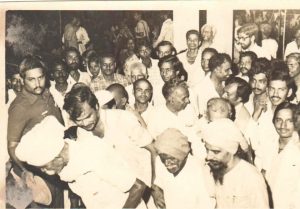
Let me give a small example from our own experience. When the present government came to power and began evicting hawkers without any rehabilitation plan, the Left stood in front of the state and fought those evictions. We often saw these people primarily through the lens of political mobilisation—as workers to be organised and as participants in a political struggle. But we should also see them as human beings.
The same person who stood in the scorching Kolkata sun the next day to join a protest march might have remained awake throughout the previous night guarding a hawker’s shop. That person has a family to support, children to educate, rent to pay, illnesses to deal with, and a life beyond the protest march.
The political worker and the human being are not two different persons. They are the same person. This is where we need to rethink the meaning of trade union and working-class politics.
Therefore, the union cannot remain confined to the workplace. It must enter the community.
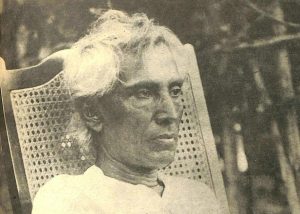
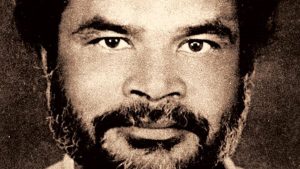
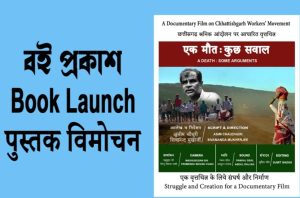
In this context, I would like to bring back the experience of Shankar Guha Niyogi and the Chhattisgarh Mukti Morcha (CMM). The Chhattisgarh Mine Shramik Sangh, founded in 1977, evolved into the Chhattisgarh Mukti Morcha in 1979. The idea was much larger than conventional trade unionism. The struggle of mine workers was connected with the broader life of the community, including the struggles of peasants and other sections of working people.
Niyogi’s experience demonstrated that a union could become much more than an organisation for negotiating wages and working conditions. It could become part of a broader movement for the liberation and transformation of the community in which workers live.
The CMM’s initiatives around education, healthcare, culture, sports, environment, women’s participation, and community organisation are particularly important in this regard. The underlying principle was simple: the worker does not leave his or her humanity at the factory gate.
There are some books and articles on Niyogi and the CMM, as well as the Sanhati archive dedicated to Shankar Guha Niyogi and the CMM. Those interested may find the archive useful: Sanhati – Shankar Guha Niyogi Archives. I strongly believe this experience deserves serious reconsideration today.
We also need to reinvent Gramsci. His concept of the organic intellectual is particularly relevant. The working class does not need intellectuals who merely speak for workers. It needs organic intellectuals who emerge from social struggles, learn from people’s lived experiences, help people understand their own conditions, and connect particular struggles to a broader understanding of society. These people live among us. They are our friends, families, neighbours, and so on.
This intellectual and cultural work is crucial because political consciousness does not emerge overnight. We need to create a culture in which people can look beyond the identities that divide them and recognise the material interests and human experiences that connect them. This does not mean denying caste, religion, gender, ethnicity, or other identities. It means developing a class consciousness capable of building solidarity across those identities.
This, to me, is the contemporary meaning of Gramsci’s War of Position: building an alternative common sense capable of challenging the cultural hegemony of dominant interests.
A further insight may be added here.
If we look closely at attacks on minorities in India, a striking pattern emerges – almost all of them, if not all, are poor, working-class, and socially vulnerable people. It is much harder to recall comparable attacks directed at members of the affluent upper-middle class or the wealthy.
This does not mean that identity has no significance. On the contrary, identity can determine who is targeted. But class profoundly shapes who is most vulnerable to violence, exclusion, and dispossession.
This raises another important question: Why is so much hostility towards minorities politically propagated and mobilised?
Here, the broader social and economic record deserves attention. Unemployment, poverty, and inequality remain major concerns. When material grievances are not adequately addressed, identity politics can provide an alternative political language through which public anger is redirected. Instead of asking why people remain unemployed, why wages are stagnant, why inequality persists, or why economic security is increasingly precarious, political discourse can encourage people to ask who belongs, who does not, and who should be blamed.
Electoral politics therefore deserves scrutiny. When economic grievances become politically significant, identity-based polarisation can shift the terrain of political debate—from employment, poverty, and inequality towards religion, community, and belonging.
The consequence is a political paradox: people who share common material interests can be encouraged to see one another as adversaries.
This is why the relationship between class and identity needs to be examined much more carefully. Identity is real; discrimination based on identity is real; and the political mobilisation of identity is real. But identity does not operate independently of class. Economic and social position can profoundly influence a person’s capacity to withstand discrimination, violence, economic exclusion, or state action.
The central question, therefore, is not simply: Who is being targeted because of their identity? It is also: Who among those communities is most vulnerable to that targeting, and why?
A serious analysis of contemporary Indian politics must bring class back into the centre of the discussion. Otherwise, we risk understanding communal conflict only as a conflict between communities while overlooking the class relations, economic insecurities, and material inequalities that determine who suffers most from it. That is where the politics of class and identity meet.
The struggle for hegemony begins long before the final political confrontation. It takes place in tea shops, neighbourhoods, workplaces, trade unions, schools, cultural spaces, social media, and everyday life. It requires patience, organisation, education, and the creation of an alternative common sense.
Only when such a broad social and cultural foundation has been built can political forces acquire the legitimacy, organisation, and popular support necessary for a more direct political struggle—the War of Manoeuvre.
The challenge before us, therefore, is not simply to revive trade unions. It is to reimagine what a union can be.
A union that fights for wages but also for healthcare.
A union that fights against retrenchment but also for education.
A union that fights for workers’ rights but also for housing and dignity.
A union that organises both the workplace and the community.
A union that sees the worker not merely as a producer but as a complete human being.
And a political movement that does not ask people to surrender their identities but helps them discover the solidarity that exists across those identities.
Perhaps this is one way to bring class politics back to the centre of contemporary Indian politics—not by denying identity, but by building a larger human and material solidarity around it.
Take the union to the community.
Take class politics into everyday life.
And, above all, see the worker as a human being.
Before I end, I would like to recall two oft-quoted statements by two communist leaders. Jyoti Basu often said, “Go among the people and learn from the people,” while Azizul Haq said, “Love the people endlessly.”
Our journey must begin with these two statements—simple in form, profound in meaning.
Today marks the 35th death anniversary of martyr Shankar Guha Niyogi. This piece is written in remembrance of him.