

Najma’s Bitto
Sometimes, or rather many times, memories, thoughts and experiences lie quietly tucked into a forgotten corner of the mind’s closet for years together, until something happens which draws out these memories and experiences from their forgotten corners. Even as many such memories wait to be rediscovered, the incident described in this article started compelling me in the context of the vengeance with which the Modi era was unleashed upon us in 2014. It deals with the major conceptual faultline that confronts the task of reinforcing secularism in India – the choice between “tolerance” versus a shared vision and perseverance for our collective future.
Mera abai watan (the place to which I belong) is Lucknow. Lucknow is my “city of joy”; for me Lucknow’s identity derives from old Lucknow.
The newer part of the city was built barely thirty to thirty-five years ago and is barely a reflection of what Lucknow otherwise stands for. One can hardly conceptualize Lucknow’s legendary culture, its tehzeeb, without being able to imagine or having known old Lucknow. This tehzeeb was so characteristic of Lucknowi society that one would find traces of it in every facet of Lucknowi life. I still recall, when I would accompany my maternal uncle to the Raqabganj sabzi mandi (vegetable market), the hawkers would try to attract buyers to the slender and delicate kakdis (skinny cucumbers) with the poetic call, “Lijiye, lijiye, laila ki ungliyan, majnu ki pasliyan!’ (‘Come, come, get these delicate fingers of Laila, the slender ribs of Majnu’), referring to the legendary tale of the star-crossed lovers, Laila-Majnu.
Old Lucknow’s lanes and by-lanes, its busy bazaars, the Chowk – famous for chikan embroidery and zariwork; Prakash ki kulfi in Aminabad (a popular market in old Lucknow); the early morning doodh malai and jalebi stalls; the horse-driven ikkas and the tangas; the masjids and their aazaans; the Siddhanath Mandir next to our house; burqa-clad women and the Muslim men wearing dupalia topis (headgear sometimes worn by Hindu men too, especially on Holi); Chaar Bagh railway station, Hanuman Inter “Kalej” and “Quins Kalej” (colleges from where my mother and father had matriculated respectively; in the Awadh area of Uttar Pradesh “college” would typically be pronounced as “kalej”); and, of course, how can one forget the mangoes – all of these shall forever be etched as a part of my childhood memories. Another feature that is ubiquitous in the old city is patang-baazi – the fine art of kite-flying – the more colloquial term for which is “kankawwa udana”. It is not possible to say that there is a particular season for kite-flying in Lucknow. “Day-time” seems to be the only condition for indulging in this regal sport, which goes on for three hundred and sixty-five days a year.
My maternal uncle’s house was a one-room ground floor tenement in a building that went by the name of “Saryu Niwas”1 in Ahiyya Ganj, located on the intriguingly named Nadaan Mahal Road (Road of the Innocent Palace). I still wonder, sometimes, if that one-room set-up – which had an attached verandah, a part of which was covered to provide an open kitchen space with a chimney – was made of some stretchable material. That house had been home to my mother before her marriage, where she lived with her eight other siblings, all but two of whom were older than her. Even after her wedding, it remained home to three of my maternal uncles (of whom the eldest and the youngest remained bachelors), my mami (maternal aunt) and four cousins. Yet, it could easily accommodate all of us (my mother, brother, sister, myself and my father when he would join us) when we went visiting Lucknow during our summer vacations – with space still remaining for unannounced guests from the village. Now that every one of us has a spacious home, we have started fearing having to host guests beyond a day, or even for a few hours. Like the values that constitute probity in public life, Lucknow’s glory too has faded over the years. The incident I am about to narrate happened about forty-seven or forty-eight years ago, when I was still a boy. I do not remember all the details very precisely; my imagination has come into play to fill the gaps, but I can assure you that the core elements of the event have remained unchanged.
As I have already mentioned, Lucknow is obsessed with kite-flying. Unfortunately, our father, who has forever been our feudal lord, was fully convinced that kite-flying was the pastime of vagabonds. This kept my brother and me from acquiring the skills and refined subtleties of this ethereal sport. My sister was, of course, gendered out of this sport. One summer vacation, however, our pent-up desire to indulge in this nawabi (royal) sport burst forth with a vengeance. The benevolent pockets of our relatives helped nurture this indulgence. Our lack of skills was compensated with the help of our cousin, who fought (God alone knows how many) scintillating duels for us and for himself in the vengeful skies over old Lucknow, ridden with kan-kawwas or varied shapes and colours. On that glorious day, both my brother and I also got a chance to tug at the kite-strings in this great game.
One bright summer day, we found ourselves on the terrace of Saryu Niwas somewhat early, waging yet another battle in the sky. Several other terraces that we could survey were already occupied by similarly intent sky-raiders. The day did not begin fortuitously. Our very first flight of fancy was cut short by a rival on a nearby terrace, and we watched in dismay as our kite glided away to settle on the terrace of a house further down Nadaan Mahal Road. Not t be hamstrung for long, my cousin shouted the command to run and recover the kite before the others could, along with the instructions for finding the entrance to the building on the terrace of which the kite had fallen.
In no time, I had climbed down the three stories of Saryu Niwas, dashed out of the front door of the building, onto the lane it opened to, and thereon to the Nadaan Mahal Road. Barefoot and tugging up my shorts, I ran for the kite. I found myself climbing the stairs of a building; on the terrace of which (I guessed) our kite had safely landed, waiting for me to recover it. I quickly made the first flight of stairs; just as I was turning to run up the second, my Mission-Kite-Retrieval was halted in its tracks.
Until now, I had barely noticed anything that might have existed around me on the road and in this totally unknown building. Suddenly, a gruff male voice rudely cut through my trance: ‘Aye ladke, kahan hamari dehleez mein ghuse chale aa rahe ho?’ (Hey boy, what do you think you are dong, crossing over our threshold and into the house uninvited?’) I looked up and saw an old Muslim man sitting on a low cane moodha (stool) next to the door that opened onto the stairway.
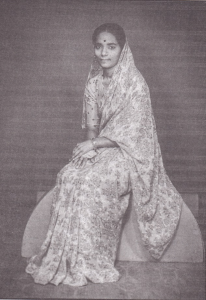
The door led to a verandah that was covered by a corrugated asbestos sheet on top. An intricate wrought-iron railing, with delicately designed iron pillars, circumscribed the outer boundary of the verandah. A rolled-up curtain of chik that could be lowered for privacy hung above the railing from the iron bar supporting the asbestos sheet. The inner boundary of the verandah was circumscribed by a white wall with arched doorways, which perhaps led to the inner chambers of the house. A woman, roughly my mother’s age (early or maybe mid-thirties), was sitting in front of a chulha (earthen stove) trying to ignite it with the help of a blowpipe.
I froze with fear at the old man’s stern query. It was not the kind of fear that a boy of eight or nine years would experience upon being confronted by a stranger. It was different: this was the first time I had entered a Muslim house. Until then, I would think of Muslims as “those people” whom I had looked at from afar, or met in the safe company of my parents. I had never interacted with them by myself, with the sole exception of the bangle-seller right across the gali (lane) in front of my mama’s house.
Generally, Muslims were either never thought of in positive terms, or simply did not exist in the eyes of the people in my life. No one had specifically fed my mind against them; the Hindu political Right did not wield the kind of influence in Indian society that it does today. I just happened to have imbibed the way the world around me seemed to think at the time.
The fact that I belong to a conservative Brahmin family from central Uttar Pradesh probably also played a role in enhancing my trepidation at that moment.
However, egged on by my determination to retrieve the kite, I looked at the gentleman with fearful but intense eyes that said, ‘Whatever be your authority, I am not backing off – at least not yet.’
Meanwhile, he seemed to be mellowing into amusement over my discomfiture. He asked me, ‘Kya naam hai tumhara?’ (‘What is your name?’)
‘Bikku’, I said. ‘Hamari patang aapki chhat par gir gayi hai.’ (‘Our kite has fallen on your terrace.’)
‘Kiskey yahan rehte ho?’ (‘Whose house do you live in?’)
‘Putaan mama ke yahan’ (‘In Putaan mama’s house’.)
When he seemed not to recognise the person, I mentioned my uncle’s formal name, Gaya Charan Shukla. ‘Ohhhhh’, came his acknowledgement.
‘Lekin hamne to tumhe kabhi dekha nahin’. (‘Bu I have never seen you.’)
‘Hum Dilli mein rehte hain na….’ (‘It’s because we live in Delhi….’) I clarified. ‘Garmi ki chuttiyon mein aayen hain.’ (‘We have come for the summer vacations.’)
This conversation had allayed my anxiety, encouraging me to lower my guard.
The woman at the chulha looked up at me with a glorious smile and asked in Awadhi, ‘Aye tum Bitto ke larika aao?’ (Oh, are you Bitto’s son?’)
I replied, ‘Haan, hamari mummy ka naam Shakuntala Bajpai hai; mein unka bada beta hoon.’ (Yes, my mother’s name is Shakuntala Bajpai; I am her elder son.’)
She got up and walked up to me, held my hand and gently pulled me into the verandah, saying, ‘Daro nahin, hum tumhari mausi aan; tumhari amma hamre saathe Hanuman inter kalej maihan padhti rahen.’ (‘Do not be afraid, I am your mausi [mother’s sister]; your mother used to study with me in Hanuman Inter College’). All this while, her countenance remained brightly lit by the glorious smile. I was stymied by this turn of events and couldn’t figure out how to react, except to repeat, ‘Meri patang?’ (‘My kite?’)
‘Haan haan, tumari patanghoh mil jai’ (Yes, yes, you shall get your kite’) she replied.
She turned to her father and explained ‘Ee bitti bhare ker rahen jab Bitto pichli baar hamka Animabad2 maiha mili rahen. Apan amma ker kanaiya lade rehen, aur ab patang udawa laag.’ (‘When I met Bitto the last time in Aminabad, this one was so small. Then he was clinging to his mother’s lap, now he has started flying kites.’) She continued, pouting, ‘Dyakho Abba, Bitto Dilli se ne awuti ayen aur hamka miltihu nai.’ (‘Look Abba, Bitto does not come to meet me even when she comes from Delhi.’) Her Abba smiled, looking at me affectionately.
My newly introduced ‘Najma mausi’ then instructed her son, ‘Aye Guddi, tanik chhat par se ne bhaiya ker patang lai deyo.’ (‘Guddu, go get your brother’s kite from the terrace.’) Guddu, who must have been two or three years older than me, had come out by then and was leaning against the doorpost of his room, listening to our conversation. At his mother’s instruction, he darted off to the terrace. Meanwhile, Najma quickly rushed into the room and came out in a minute. Thrusting something into my hand, she caressed my head affectionately and said, ‘Yehka rakkho, yu hamri taraf se ne; aur apan Amma se ne kaheo ki Najma Aapa yaad kai rahi rahein.’ (‘Keep this with you, this is from my side; and tell your mother that her elder sister Najma was remembering her.’)
I looked at the unexpected gift: it was a two-rupee coin, and I was elated. Those days, two rupees still had the power to make a child feel on top of the world. Although I had relaxed, my discomfort of the unknown still lingered and kept me from being as overtly joyful as I probably would have been elsewhere. Guddu had brought back my kite by then. He handed over with a wide grin on his face. That was my moment of victory. Holding the kite securely in my hands, I ran back to the security of my mama’s home, congratulating myself on successfully accomplishing Mission Kite-Retrieval.
That afternoon, when my mother was serving us food at the chowka3, I announced to her, ‘Tumhari Najma aapa mili rehen; tumka yaad kai rahi rehen.’ (‘I met your Najma Aapa; she was remembering you.’) My mother, Bitto, froze for a moment. Her countenance reflected pleasure, surprise and inquisitiveness all at once, finally giving way to frank exhilaration. ‘Aye, Najma tumka kahan mil gayen?’ (‘Oh, where did you find Najma?’), she asked, upon which I narrated the whole story to her. ‘Aap milogi?’ (‘Will you meet her?’) I asked. ‘Haan’ (‘Yes’) she said. The incident, however, was soon forgotten.
It has taken me many years – of growing up and watching a lot of sectarian bad blood in the world – to realize that that two-rupee coin was among the most precious gifts I have received in my life.
When my sister, brother and I were still small, on occasion, Bitto would talk of Najma Aapa and her other friends and the things they did together.
But I do not remember that Bitto and Najma ever met each other since. Among the many social constructs that kept the two of them from keeping up their friendship was also the way we have defined the very concept of “secularism” for ourselves.
Notwithstanding the ways in which experts would define “secularism”, the one operational definition of “secularism” which has been grilled into the minds of Indians is “tolerance for all religions”. I do not know if anyone has ever deconstructed this word, but to my mind, it seems to me to mean, ‘Now that by accident of history this great country of ours has come to be inhabited by people following varied religions, we can’t help but tolerate each other to maintain peace in society.’ Hence it would seem that secularism, by definition, separates communities, excludes the space to imagine a shared future of prosperity, shared aspirations for a better society for all of us, and shared perseverance and sacrifices to achieve this. Our ruling classes have dinned into our heads a secularism of despondency; what we need to do is to reconstruct and rejuvenate it with our hope and vibrancy into an ideal worth living and sacrificing oneself for. Sometimes, I wonder: if only the world could be left to the devices of the Bittos and Najma Aapas of this world, wouldn’t it be that much more worth living in?
Vikas Bajpai has co-authored two books with Anoop Saraya, namely, Food Security in India: Myth and Reality and Health Beyond Medicine – Reflections on Politics and Sociology of Health in India, both Aakar Books, 2018.
Dastaan-e-Ummeed has been brought out by AlterNotes Press and can be ordered online from Amazon.
- Alas, some years back when I had taken a one-day sojourn to Lucknow while staying in Sitapur for my PhD fieldwork, I found that the building had been pulled down and a new one had come up in its I was dismayed; a part of me had been sliced away forever. ↩
- Many old-timers in Lucknow and around, especially the village folk, would often exchange syllables in names like “Aminabad”, pronouncing it as “Animabad”, just as theywould call “Lucknow”, “Nakhlau”. ↩
- The space within the kitchen where people would sit on a floor mat or a pata (a flat wooden seat) to have ↩