

Under the leadership of Union Home Minister Amit Shah, rallies and similar events are being organised across the country, ostensibly to “protect democracy” and “eradicate anarchism.” Shah alleges that opposition leaders—including Rahul Gandhi—and various political parties are fostering anarchy in the nation.
It is unclear whether Amit Shah even understands the meaning of “anarchism” or what it means to be an “anarchist.”
I, for one, would like to call myself an anarchist—yet I have never quite mustered the courage to do so. This is because anarchism represents an exceptionally noble political stance: a position that rejects and repudiates all forms of authority and hierarchical structures. It is an ideological conviction that must be practised at both the individual and the collective level.
It is the realisation that I have not yet attained such a political state of mind that keeps me from labelling myself an anarchist. Otherwise, I would have described myself as one with the utmost sense of pride.
Anarchism is a political philosophy that envisions a society free from coercive hierarchies—most notably the state. Its ultimate goal is the creation of a free society that emerges through voluntary associations, mutual cooperation, and self-governance. Instead of mandates imposed from above, its foundation lies in social relationships based on mutual consent.
Anarchists emphasise that all forms of concentrated power—including the state, capitalism, patriarchy, and religious authority—centralise control, which inevitably leads to coercion, inequality, and abuse. This is distinct from the “chaos” that Amit Shah appears to perceive—and which his party and movement have been actively fostering for decades.
Such a system does not operate through state-imposed laws or market mechanisms enforced by authority; rather, it functions through voluntary cooperation and mutual aid—practices that have long existed within society. In an anarchist society, social order emerges through free agreements, collectives, cooperatives, and mutual-aid networks. Here, every individual is an end in themselves. Authority possesses legitimacy only if it is voluntarily accepted and can be withdrawn at any time. Various currents exist within anarchism, including individualist anarchism, anarcho-communism, anarcho-syndicalism, mutualism, and green anarchism. All of them reject state coercion and regard mutual consent and autonomy as fundamental values.
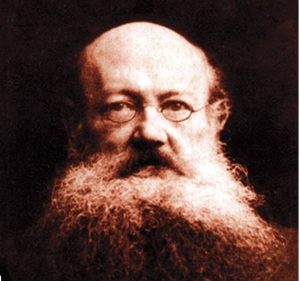
It is unclear whether Amit Shah has heard of Peter Kropotkin. Kropotkin, who rejected all forms of power derived from wealth, knowledge, or status, was respectfully referred to by many as a “saint of anarchism.”