


আমরা এখন অবধি সুশ্রুত-সংহিতা নিয়ে যতটুকু আলোচনা করেছি, সেখানে একজন “শল্যহর্তা” তথা সার্জন এবং বৈদ্যের নির্দিষ্ট অবস্থান কী এই বিষয়ে কিছু টুকরো আলোচনা হয়েছে। কিন্তু একটি অঞ্চলের শাসক, প্রতিপালক এবং দণ্ডমুণ্ডের কর্তা রাজার সাথে তাঁর কী সম্পর্ক ছিল, এ নিয়ে আমরা কোন নির্দিষ্ট আলোচনা করিনি। এবং আরেকটি বিষয়ও সমধিক গুরুত্বপূর্ণ – একজন রাজবৈদ্যের কথা যখন বলা হচ্ছে, তখন ধরে নেওয়া যায় আরও অনেক রাজবৈদ্যের উপস্থিতি ছিল। কিন্তু গুরুকুল শিক্ষালাভের পরে যখন একজন পেশাদার বৈদ্য বা শল্যহর্তা হিসেবে (যে বিষয়ে আমরা আমাদের আলোচনার শুরুতে বিস্তারিতভাবে ব্যাখ্যা করেছি) স্বাধীনভাবে তার পেশা কীভাবে চালাতেন, এই বিষয়ে আমরা কোন সম্যক আলোচনা করতে পারিনি – সূত্র ও তথ্যের অভাবে।
সুশ্রুত-সংহিতা-র সূত্রস্থান-এর ৩৪তম অধ্যায়ে এ বিষয়ে বিস্তারিত আলোচনা রয়েছে। এবং, সম্ভবত, এই অধ্যায়টিই সংক্ষিপ্ততম অধ্যায়। ৩৪তম অধ্যায়ের শুরু হচ্ছে এই বাক্যটি দিয়ে – “অনন্তর আমরা যুক্তসেনীয় অধ্যায় ব্যাখ্যা করব।”[1] এরপরে যশোদানন্দন যোগ করছেন (বন্ধনী চিহ্নের মধ্যে) – “যুক্তসেন অর্থাৎ সসৈন্য রাজা। সসৈন্য রাজাকে যেভাবে বৈদ্যের রক্ষা করা উচিত, এই অধ্যায়ে তা বিবৃত হয়েছে।”[2]
মিউলেনবেল্ড সংক্ষেপে এই অধ্যায়ের মূল বিষয় ব্যাখ্যা করেছেন এভাবে – “Chapter thirty-four is concerned with the duties of a royal physician and army surgeon,[3] as well as with the four pillars of treatment.”[4]
এই অধ্যায়ের শুরুর শ্লোকে বলা হয়েছে –
বিজিগীষুঃ সহামাত্যৈর্যাত্রাযুক্তঃ প্রযত্নত।
রক্ষিতব্যো বিশেষেণ বিষাদেব নরাধিপঃ।। (সূঃ ১.৩৪.৪)
বঙ্গানুবাদে – “অমাত্যগণ সহকারে শত্রুজয়ের জন্য (বিজিগীষুঃ) যাত্রাকারী রাজাকে যত্ন নিয়ে সবরকমের বিষপ্রয়োগ থেকে রক্ষা করা উচিত।”
এরপরের শ্লোকে বলা হয়েছে – পন্থানুমুদকং ছায়াং ভক্তং যবসন্ধিনম্। দূষয়ন্ত্যরয়স্তচ্চ জানীয়াচ্ছোধয়েৎ তথা।। (১.৩৪.৫)
বঙ্গানুবাদে – শত্রুরা রাজার পথ, জল, আশ্রয় দেওয়া বৃক্ষাদির ছায়া, অন্ন, অশ্ব সহ অন্য প্রাণীর খাদ্য তৃণ ও জ্বালানি দূষিত করে থাকে। এজন্য ঐ সমস্ত দ্রব্যের পরীক্ষা এবং শোধন করা আবশ্যক।[5]
এরপরের শ্লোকটি হল – তস্য লিঙ্গং চিকিৎসা চ কল্পস্থানে প্রবক্ষ্যতে। (১.৩৪.৬)
এর বঙ্গার্থ হল – বিষদূষিতের লক্ষণ ও চিকিৎসা কল্পস্থানে বলা হবে।
পরবর্তী শ্লোক – একোত্তরং মৃত্যুশতমথর্বাণঃ প্রচক্ষতে।
তত্রৈকঃ কালসংযুক্তঃ শেষা আগন্তবঃ স্মৃতা।।
মিউলেনবেল্ডের ইংরেজি অনুবাদে – “the Atharvaveda experts acknowledge one hundred and one kind of death, only one of which is natural (কালসংযুক্ত), while all the rest are due to āgantu (আগন্তবঃ) agencies; the physician (vaidya – বৈদ্য) and the priest (purohita – পুরোহিত), experts in rasa and mantra respectively, should protect the king from dying doṣaja (দোষজ) and āgantuja (আগন্তুজ) (1.34.8cd-12ab).”[6]
এর পরের শ্লোক – ব্রহ্মা বেদাঙ্গমষ্টাঙ্গমায়ুর্বেদমভাষত।
পুরোহিতমতে তস্মাদ্বর্তেত ভিষগাত্মবান্।।
মিউলেনবেল্ডের ইংরেজি অনুবাদে – “Brahmā expounded the eight-limbed āyurveda, which is a vedāňga (বেদাঙ্গ): this implies that a physician should act in accordance with the opinions of the purohita (34.8cd-9ab)”[7].
পরবর্তী শ্লোক – সঙ্করঃ সর্ববর্ণানাং প্রণাশো ধর্মকররণাম্। প্রজানামপি চোচ্ছিত্তির্নৃপব্যসনহেতুতঃ।। (৩৪.৯কখ)
এবার সরাসরি বাংলা অনুবাদেই দেখে নেওয়া যাক – “রাজার বিপদ হলে সর্ববর্ণের একত্ব (intermixture of caste-orders – সংকরঃ সর্ববর্ণাং) এবং ধর্মকর্মসমূহের নাশ হয় এবং প্রজাদের উচ্ছেদ হয়ে থাকে।” (১.৩৪.৯কখ) এখানে বিশেষভাবে লক্ষ্যণীয় রাজার বিপদের সঙ্গে বর্ণাশ্রমপ্রথার বিপর্যয়ের প্রসঙ্গটি জড়িয়ে থাকার বিষয় রীতিমতো গুরুত্ব পেয়েছে।
মিউলেনবেল্ডের প্রমিত অনুবাদে রয়েছে – “the importance of a king; the preservation of his life is all-important (34.8cd-9ab); the duties of an army surgeon in the camp (স্কন্ধাবার)[8] (34.12cd-14ab); a physician who has mastered other sciences than medicine deserves to be praised by the king and experts (34.14cd-15ab), the physician, the patient, the drug and the attendant as the four pillars (পাদ) on which the success of treatment depends (34.15cd-16ab); the physician holds the most prominent place among the four, like the অধ্বর্য্যু (যথাধ্বর্য্যুং)[9]; he is even when quite alone, able to save the patient, like a helmsman without the crew can save a ship (34.16cd-19ab); good qualities of a physician of a physician, patient, drug and attendant (34.19cd-2).”[10]
এখানে ৩৪ নম্বর অধ্যায় শেষ হয়েছে। এবার আমরা সংস্কৃত এবং প্রাসঙ্গিক বঙ্গানুবাদে এই আলোচনাকে আরেকটু বোঝার চেষ্টা করব।
বাংলা অনুবাদে বলা হয়েছে – “অষ্টাঙ্গ আয়ুর্বেদ বেদেরই অঙ্গ। ব্রহ্মা এরকম ব্যাখ্যা করেছিলেন। ধীর বৈদ্য পুরোহিতের সঙ্গে পরামর্শ করে কাজ করবেন – ব্রহ্মা বেদাঙ্গমষ্টাঙ্গমায়ুর্বেদ্মভাষত। / পুরোহিতমতে তন্মাদ্বর্তেত ভিষগত্মবান্।। – ৩৪.৫কখ)।”
এখানে নজর করার মতো বিষয় হল, এর আগে বিভিন্ন ক্ষেত্রে আমরা চিকিৎসকদের সমাজের নীচুতলার প্রায়-অচ্ছ্যুৎ একটি বর্গের মানুষ হিসেবে চিহ্নিত হতে দেখেছি ব্রাহ্মণ্যবাদী সমাজে। এমনকি চিকিৎসকদের দেওয়া খাদ্যকে পুঁজের সঙ্গেও তুলনা করা হয়েছে। কিন্তু এখানে সমাজের সর্বোচ্চ আসনে আসীন পুরোহিতের সঙ্গে বৈদ্যকে একাসনে বসানো হল। এর পেছনের কারণ কী সমরে প্রবৃত্ত রাজার কাছে যুদ্ধ একটি তথাকথিত “ইমার্জেন্সি” ছিল, যে কারণে বৈদ্য এবং পুরোহিত সমাসনে বসতে পারেন? নির্দিয্ট উত্তর অজানা, অনুমান নির্ভর।
“সাধারণ লোকেদের সঙ্গে রাজদের কেবল মূর্তিতেই (চেহারায়) তুল্যতা আছে (পুরুষাণাং নৃপণাঞ্চ কেবলং তুল্যমূর্তিতা– ৩৪.১০)। কিন্তু এঁদের আজ্ঞা, দান, ক্ষমা, ধৈর্য্য ও বিক্রম অমানুষিক – ৩৪.১০খ)।”
“রাজসমীপস্থ বৈদ্যের যশ যখন ধ্বজের ন্যায় সমুচ্ছ্রিত (বৃদ্ধিপ্রাপ্ত) হয়, তখন বিষ, শল্য ও রোগে পীড়িত মানুষেরা অসন্দিগ্ধ-চিত্তে তাঁর কাছে গমন করে। আয়ুর্বেদ বিশারদ অথচ অন্যান্য শাস্ত্রে অবিশারদ নন, এরকম বৈদ্য নৃপ ও আয়ুর্বেদজ্ঞদের পূজিত হলে ধ্বজের (পতাকা) মতো শোভা পেয়ে থাকেন – (৩৪.১৩-১৪)।”[11]
এই অধ্যায়ের শেষে বলা হয়েছে – “পরিচারক স্নিগ্ধ, অজুগুপ্সু (যে কোন কথা গোপন করতে চায় না), বলবান, রোগীর রক্ষায় যত্নের সঙ্গে নিযুক্ত, বৈদ্যবাক্যের পালনকারী এবং অশ্রান্ত তাকে পরিচার-পাদ বলে – স্নিগ্ধোহজুগুপ্সুর্বলবান যুক্তো ব্যাধিতরক্ষণে। বৈদ্যবাক্যকৃদশ্রান্তঃ পাদঃ পরিচরঃ স্মৃতঃ।। – ৩৪.২৪।”
সুশ্রুত-সংহিতা-র text-crical পাঠ
চরক– এবং সুশ্রুত-সংহিতা প্রাচীন আয়ুর্বেদের সবচেয়ে মান্য, গ্রাহ্য এবং প্রাধান্যকারী টেক্সট। এই দুটির মধ্যে সুশ্রুত-সংহিতা যেহেতু মূলত প্রয়োগ-কেন্দ্রিক (চরকের ক্ষেত্রে বহু সময়েই দার্শনিক প্রশ্ন নির্ধারক স্থানে থেকেছে) এবং প্রাচীন ভারতের শল্যচিকিৎসা (যাকে আধুনিক সময়ে সার্জারি বলা ছাড়া কোন গত্যন্তর নেই) খুটিনাটি বিষয়ে সবিস্তারে আলোচনা করেছে, প্রধানত এ কারণে আন্তর্জাতিক জগতে সংস্কৃতজ্ঞ স্কলার, ঐতিহাসিক, ভাষাবিদ এবং পণ্ডিতদের দৃষ্টি বিশেষভাবে আকর্ষণ করেছে। নেপালে ৩টি নতুন ম্যানাসক্রিপ্ট আবিষ্কৃত হবার পরে শুরু হয়েছে – The Suśruta Project – Dominik Wujastyk এবং অনান্যদের নিবিড় পাঠ ও শ্রমে।[12]
টেক্সট-ক্রটিকাল এডিশনের গুরুত্ব নিয়ে পাশ্চাত্যে অনেক আগেই আলোচনা শুরু হয়েছে। ভারতে তিনজন স্কলার এক্ষেত্রে অগ্রগণ্য – বিষ্ণু সীতারাম সুখতঙ্কর (মহাভারত নিয়ে ক্রিটিকাল পাঠ রচনা করেছেন – পুণের ভাণ্ডারকর ওরিয়েন্টাল ইন্সটিতিউট থেকে প্রকাশিত Critical Edition of Mahabharata-র সম্পাদক এবং ১৯১৯ থেকে ১৯৬৬ পর্যন্ত সুদীর্ঘ সময়কাল জুড়ে আরও অনেক স্কলার এবং সংস্কৃতজ্ঞ পণ্ডিতদের অংশগ্রহণে কাজটি সম্পূর্ণ হয়েছে), ডি ডি কোসাম্বি (ভর্তৃহরির শতকত্রয়-র ক্রিটিকাল পাঠ রচনা করেছেন) এবং সুমিত্র মঙ্গেশ কাত্রে (যাঁর উল্লেখযোগ্য গ্রন্থ হচ্ছে Introduction to Indian Textual Criticism (1941)।
কোন একটি টেক্সট ক্রমাগত পু্নর্লিখন তথা “কপি” হতে থাকলে কী হয় এ বিষয়ে কাত্রে একটি উদাহরণ দিয়েছেন – “If 100 be taken to indicate perfect correctness and the text A is considered to have been copied twice, B from A and C from B, then let us assume that the errors of the first copyist have removed 3 pc of the truth from his copy B, and the errors of the second copyist have removed 3 pc again of the truth, from his copy C, which is copied from this B. The relative values of the two copies B and C will be respectively 97 and 94·09.”[13]
পরে যোগ করছেন, যদি D কপি করা হয় C থেকে তাহলে এই ভুল হবে ৯১.১৭%।[14] তাঁর অভিমত হল – “The Importance of this is obvious when we remember that the text of most Sanskrit and Prakrit classics is a transmitted text or one which has passed through we do not know how many stages of copying.”[15]
কাত্রে কেন এরকম ভুল হয় তার কারণ হিসেবে দুটি প্রধান বিষয়কে চিহ্নিত করেছেন – (১) “visual errors”, এবং (২) “psychological errors”। তাঁর পর্যবেক্ষণ – “Visual errors comprise substitutions, omissions or additions which the eye of the scribe makes through weakness or inattention. Psychological errors arise from the tendency of the mind to read some meaning into its own mistakes or the mistakes in the exemplar from which the copy is made. The main corruptions in classical texts are largely due to errors of this class. Even the best scribe cannot copy mechanically for long without allowing some play to his intelligence, even at the worst he hardly ever copies letter for letter any writing that he understands In most instances it will be found that the scribes copy words and not letters.”[16]
ম্যানাসক্রিপ্টের ক্রিটিকাল স্টাডির ক্ষেত্রে ইউরোপীয় স্কলারদের অবদান শ্রদ্ধার সঙ্গে স্বীকার করেছেন তিনি।[17] তাঁর নির্দিষ্ট মতামত হল – “No definite rules can be laid down here to indicate the varying nature of the text as constituted, expressed in the four categories: accepted, doubtfully accepted, doubtfully rejected and rejected, whatever system the editor adopts, he should clearly indicate It in his list of abbreviations and diacritical signs.”[18]
Sven Sellmer তাঁর একটি প্রবন্ধে দেখিয়েছেন কীভাবে “হৃদয়” তথা heart শব্দটির অর্থান্তর ঘটতে পারে।[19] এমনকি আমাদের প্রচলিত ধারণার বাইরে গিয়ে তাঁর বয়ানে Sellmer দেখিয়েছেন “a role it shares with udara and jaṭhara, both commonly translated as ‘belly’.”[20]
চরক-সংহিতা-র ওপরে একটি বৃহৎ আন্তর্জাতিক প্রোজেক্ট শুরু হয়েছে ২০১২ সাল থেকে Austrian Academy of Sciences: Philosophy and Medicine in Early Classical India-র তত্ত্বাবধানে Karin Preisendanz-এর অধিনায়কত্বে “Philosophy and Medicine in Early Classical India I and II” বলে একটি প্রোজেক্টের কাজ চলছে।[21] এই প্রোজেক্টে অংশগ্রহণকারী অন্য দু’জন সহয়োগী গবেষক হলেন – Philip Maas এবং Cristiana Pecchia।
এই প্রোজেক্টের প্রস্তাবনায় বলা হয়েছে – “The Carakasamhita is one of the most important and oldest treatises of the classical Indian tradition of medicine (Ayurveda), going back to the first centuries CE. Its third book, the Vimanasthana, is a rich source for basic concepts of early classical Indian medicine inasmuch as it treats topics such as the general nature and classification of diseases and their specific relationship to ”tastes” and humours, the types and combinations of medicinal substances, the foodstuffs employed in treatment, dietary rules and regulations, and the various basic constitutions of patients which play a central role in therapy … Following upon a pilot project on the eighth chapter of the Vimanasthana, the project aims at the critical edition of the Vimanasthana on the basis of all available manuscripts, taking into consideration the preserved commentaries and the evidence of other classical works on Ayurveda.”[22]
এই বিষয়ে আরও বিস্তৃত আলোচনার জন্য দ্রষ্টব্য Philip Maas-এর গবেষণাপ্রবন্ধ।[23] Maas-এর প্রবন্ধটি চরক-সংহিতা-র একটি পরিশ্রমসাধ্য text-critical পাঠ। উল্লেখ্য, ভিয়েনা প্রোজেক্টে চরক-সংহিতা-র বিমানস্থান-এর প্রথম ৭টি অধ্যায় (১-৭) এবং শারীরস্থান-এরও প্রথম ৭টি অধ্যায়ের (১-৭) “ক্রিটিকাল এডিশন” প্রস্তুত করা হবে বলে আপাতত লক্ষ্য স্থির করা হয়েছে। এই খবর ২০১৬ সালের। এর মধ্যে কাজের আরও অগ্রগতি ঘটেছে আশা করা যায়।[24]
চরক-সংহিতা-য় মোট ৮টি স্থান-এ ১২০টি অধ্যায় রয়েছে। এর মধ্যে এই সুবিশাল কর্মযজ্ঞে মাত্র ১৪টি – বিমানস্থান এবং শারীরস্থান ধরে – অধ্যায়ের “ক্রিটিকাল এডিশন” তৈরি করা সম্ভব হচ্ছে। ফলে সহজেই অনুমেয়, কী বিপুল পরিমাণ বৌদ্ধিক ও মানসিক পরিশ্রম এবং বিভিন্ন ধারার জ্ঞানচর্চাকে একত্রে সংযুক্ত করতে হবে – যেমন ইতিহাস, anthropolgy, palaeology, philology, orthography, প্রাচীন ব্যাকরণের ধারণা ইত্যাদি।
সুশ্রুত-সংহিতা-র “টেক্সট-ক্রিটিকাল” পাঠ
মিউলেনবেল্ড দেখিয়েছেন, সুশ্রুত-সংহিতা-র ৪০টির বেশি বিভিন্ন ভাষায় অনুবাদ হয়েছে – ১৮৩৫-এ মধুসূদন গুপ্তের প্রথম অনুবাদের পরে। এমনকি লাতিনে অনুবাদও এর মধ্যে আছে।[25] ডমিনিক য়ুজাস্তিক জানিয়েছেন – “At a rough estimate, there may be as many as two hundred manuscripts of the Suśrutasaṃhitā in existence in libraries worldwide.”[26]
যাদবজি ত্রিকমজি আচার্য্যের সম্পাদিত সুশ্রুত-সংহিতা-র প্রচলিত, মান্য এবং অনুমোদিত (vulgate) সংস্করণকে এখনও অবধি সবচেয়ে প্রামাণ্য সংস্করণ হিসেবে গ্রাহ্য আন্তর্জাতিক এবং জাতীয় স্কলারদের স্তরে। পরবর্তীতে পি ভি শর্মা এবং কৃষ্ণমূর্তিও অনুবাদ করেছেন। কিন্তু কেউই যাদবজির তুল্য নয়।
যাদবজির প্রথম সংস্করণে (১৯১৫) কলকাতা (রয়্যাল এশিয়াটিক সোসাইটি), জয়পুর (পণ্ডিত গঙ্গাধরভট্টশর্মন) এবং বুন্দি থেকে সংগৃহীত ৩টি ম্যানাসক্রিপ্টের ওপরে নির্ভর করেছিলেন। ২য় সংস্করণে (১৯৩১) আরও ৯টি অতিরিক্ত ম্যানাসক্রিপ্ট বিচার করেছিলেন। তাঁর জীবিতাবস্থায় তৃতীয় তথা শেষ সংস্করণে (১৯৩৮) তিনি আরও ৩টি ম্যানাসক্রিপ্টের পাঠ অন্তর্ভুক্ত করেন। এর মধ্যে একটিকে চিহ্নিত করা যায়নি (প্রাচীন তালপাতার পুথি যা তিনি নেপালের হেমরাজশর্মন-এর কাছ থেকে) পেয়েছিলেন।
কিন্তু তাসত্ত্বেও, য়ুজাস্তিক আক্ষেপ করছেন, এরকম একজন অতিমাত্রায় শিক্ষিত এবং পরিশ্রমী স্কলার যাদবজি টেক্সট-ক্রিটিকাল এডিশন করতে পারেন নি। কেন টেক্সট-ক্রিটিকাল এডিশন নিয়ে এত কথা বলা? য়ুজাস্তিক খুব সংক্ষেপে এর ব্যাখ্যা করেছেন – “These methods enable us to make historically-informed judgements about the transmission of the text, i.e., separating recensio (a critical revision of a text or document) from emendatio (act of correcting and improving something that is not right).”[27]
য়ুজাস্তিক এবং অন্যান্যরা একটি টেবিল করে যাদবজির ৩টি সংস্করণের মধ্যেকার পার্থক্যকে সুন্দর ভাবে বুঝিয়েছেন।[28] 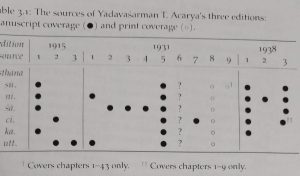
য়ুজাস্তিক এবং অন্যান্যরা যাদবজির ব্যবহৃত সবকটি ম্যানাসক্রিপ্টের তুল্যমূল্য বিচার করে সিদ্ধান্তে পৌঁছছেন – “However, we quickly see that two of the sources were other people’s printed editions, and one of those covered less than a quarter of the work (no. 9 of 1931). That reduces the manuscript base to 13 witnesses. Ācārya does not appear to have seen two of the manuscripts at all, having been sent collations prepared for him by others (7 of 1931 and 3 of 1938).”[29]
সাম্প্রতিক সময়ে ২০০৭ সালে দু’জন গবেষক নেপাল থেকে সুশ্রুত-সংহিতা-র একাধিক নতুন ম্যানাসক্রিপ্ট আবিষ্কার করেন। এই দু’জন গবেষক হলেন Dragomir Dimitrov এবং Kashinath Tamot।[30] এগুলোর বিবরণ হল – “(a) Kesar Library K,athmandu, accession no. 699, filmed as C 8017 by the Nepal-Gerrnan Manuscript Preservation Project (NGMPP); (b) National Archives, Kathmandu (NAK), accession no. 5 (pa)-333, filmed as NGMPP B 29119; (c) NAK accession no. I-1079 (filmed as NGMPP A 45/5 and A 1267/11) … The date in (a) is verified as Sunday, 13 April 878 CE. This makes the manuscript the oldest verifiably dated manuscript in Nepal and possibly of all the Indic manuscripts.”[31]
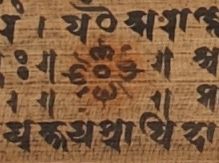 (আপাতত সবচেয়ে প্রাচীন নেপালি ম্যানাসক্রিপ্তট 699-এর মাইক্রোফিল্মের একটি অংশের চিত্র। মাঝের বিশেষ সিম্বলটি বৌদ্ধ প্রভাব বোঝায়।)
সংস্কৃতজ্ঞ স্কলার এবং গবেষক হারিমোতোর বলেছেন – “The text found in the Nepalese manuscripts itself might indicate Buddhist involvement in its composition (and later obfuscation of such traits).”[32] তাঁর সমগ্র প্রবন্ধে হারিমোতো ছাপা সংস্করণ এবং নেপালি ম্যানাসক্রিপ্টের বিভিন্ন পার্থক্য তথা অসঙ্গতির দিকে নজর আকর্ষণ করেছেন। উদাহরণ হিসেবে বলা যায় – নেপালি ম্যানাসক্রিপ্টে যেখানে “অল্পায়ুষ্ক” রয়েছে, সেখানে ছাপা সংস্করণে রয়েছে “অল্পায়ুষত্বম” এবং “সর্বশরীর” প্রতিস্থাপিত হয়েছে “সর্বাঙ্গ” দিয়ে।[33]
হারিমোতোর মন্তব্য হল – “It is worth emphasizing that the existence of manuscript (a) is a very rare case where a very old dated manuscript of a widely circulated Sanskrit text is preserved.”[34] আরেকটি “corruption”-এর উল্লেখ করেছেন হারিমোতো – “Another interesting, probably very old, corruption is the phrase “ṣaṣṭhyābhidhānair iti” found at the end of an explanation of what śalya among the eight aňga is. This phrase is meaningless in the context and appears to come from some grammatical exegesis”[35]
আরেকজন গবেষক নেপালি ম্যানাসক্রিপ্ট এবং ছাপা প্রামাণ্য সংস্করণের তুল্যমূল্য বিচার করে দেখিয়েছেন যে “in the structure of Ns in SS, we can observe the developing interest in mechanism of the disease with an anatomical background.”[36] এরপরে আরও অনেক উদাহরণ দিয়ে (বিভিন্ন অধ্যায় এবং শ্লোক থেকে) গবেষক দেখিয়েছেন – “that the classifications, such as patients with a more serious condition, or certain models being clinically distinguished from others, were inserted later.”
পাঠান্তরের এবং প্রক্ষিপ্ত শব্দ যুক্ত হবার একটি উদাহরণ পাওয়া যায় পূর্বোক্ত The Suśruta Project থেকে। এই প্রোজেক্টে ব্যবহৃত একটি চিত্র দিচ্ছি।

পাণ্ডুলিপির এই অংশটুকু নিয়ে প্রোজেক্টের সাইটে বলা হয়েছে – “This is the first folio of the śārīrasthāna (cf. edition). The text begins as normal, up to “vyākhyāsyāmaḥ.” The text continues, “atha khalu sarvabhūtānāṃ kāraṇaṃ…” This is the same as the Nepalese version of the text. However, a different scribe has inserted the marginal gloss “athovāca bhagavān dhanvaṃtariḥ suśrutāya“, which is the reading of the vulgate text of the Suśrutasaṃhitā.”
এখান থেকে পরিষ্কার হয় যে, একজন লিপিকার যখন প্রতিলিপি তৈরি করছেন তখন সেই লিপিটি তৈরি হবার সময়ে ক্রমাগত হাত থেকে হাত ঘুরে প্রজন্মান্তরে প্রতিলিপি হবার সময় কোন একজন লিপিকার “অথোবাচ ভগবান ধন্বন্তরিঃ সুশ্রুতায়” বাক্যটি যোগ করেছেন (যা উপরোক্ত চিত্রের একদম ওপরে সংস্কৃতে লেখা আছে)। তারপর থেকে এটা প্রচলিত টেক্সটে রয়ে গেছে, যদিও নেপালি সুশ্রুত সংহিতা-য় এই অংশটুকু অনুপস্থিত। এর থেকে বোঝা যায় টেক্সট-ক্রিটিকাল এডিশন একটি সঠিক পাঠ তৈরির ক্ষেত্রে কী অসীম গুরুত্ব বহন করে।
য়ুজাস্তিক স্বল্প কথায় এর গুরুত্ব বোঝান এভাবে – “These methods enable us to make historically-informed judgements about the transmission of the text, i.e., separating recensio (process of critically analyzing and comparing manuscript versions of a text to establish its original form) from emendatio (correction).”[37]
আরেকটি ক্ষেত্রে য়ুজাস্তিক জানাচ্ছেন যে “A Critical Edition of the Suśrutasaṃhitā Based on the Earliest Nepalese Manuscripts” তৈরির কাজ চলছে। এই নতুন সংস্করণ বলতে কী বোঝায় সেকথাও স্পষ্টভাবে জানানো হয়েছে – “New edition” means that the project has released an edition with full apparatus. At the present time (2022-2025), the editions of most adhyāyas are provisional: work on proof-reading and edition is still ongoing on a daily basis. These adhyāyas may be considered to be something like “critical collations” or a provisional or first draft edition. You will see the edition in the main window, and the variants from the manuscripts (K, N, H) and the printed edition (A) in the critical apparatus on the right.
- K = MS Kathmandu Kaiser Library 699
- N = MS Kathmandu National Archives 1-1079
- H = MS Kathmandu National Archives 5-333[38]
অধিকতর গভীর আলোচনার জন্য দ্রষ্টব্য য়ুজাস্তিকের পোস্ট করা “Intertextuality and the Methods of Diagnosis” শীর্ষক আলোচনা।[39]
হারিমোতোর অন্য একটি গবেষণা প্রবন্ধে সাপ বা snake নিয়ে আলোচনার ক্ষেত্রে প্রচলিত মান্য ছাপা সংস্করণ এবং নেপালি ম্যানাসক্রিপ্টের মধ্যে কী কী পার্থক্য রয়েছে সেগুলো অত্যন্ত নিষ্ঠা ও যত্ন নিয়ে দেখানো হয়েছে।[40]
সুশ্রুত-সংহিতা-র ৬ষ্ঠ স্থান কল্পস্থানের চতুর্থ অধ্যায় আলোচনা করেছে সর্পদংশন নিয়ে। ৪র্থ অধ্যায়ের শুরুর দিকে সর্পের শ্রেণীবিভাগ এবং এদের সংখ্যার কথা বলা হয়েছে। ছাপা সংস্করণ অনুযায়ী শ্লোকগুলো এরকম –
যে তু দ্রংষ্টাবিবিষা ভৌমা যে দশন্তি চ মনুষান। (কঃ ৪.৮)
তেষাং সংখ্যাং প্রবক্ষ্যামি যথাবনুপূর্বশঃ।।
অশীতিস্তেব সর্পাণাং ভিষ্যতে পঞ্চধা তু সা। (৪.৯)
দর্বীকরা মণ্ডলিনো রাজিমস্তন্তথৈব চ।।
নির্বিষা বৈকারঞ্জাশ্চ ত্রিবিধাস্তে পুনঃ স্মৃতাঃ। (৪.১০)
দর্বীকরা মণ্ডলিনো রাজিমস্তশ্চ পন্নগাঃ। (৪.১১)
তেষু দর্বীকরা জ্ঞেয়া বিংশতি ষট্ চ পন্নগাঃ। (৪.১১)
দ্বাবিংশতির্মণ্ডলিনো রাজিমন্তস্তথা দশ।।
নির্বিষা দ্বাদশ জ্ঞেয়া বৈকরঞ্জাস্ত্রয়স্থতা। (৪.১২)
বৈকরঞ্জোদ্ভবাঃ সপ্ত চিত্রা মণ্ডলিরাজিলাঃ।।
“যেসমস্ত দ্রংষ্টবিশ ভৌম সর্প (মাটির সর্প, অন্তরীক্ষের সর্প নয়) মানুষদের দংশন করে থাকে, তাদের সংখ্যা যতদূর (সম্ভব) আনুপূর্বিক বলছি। এই সমস্ত সর্প আশি (৮০) প্রকার। সেই ৮০ প্রকার আবার ৫ ভাগে বিভক্ত, যেমন – দর্বীকর (ফণাযুক্ত), মণ্ডলী (ফণাহীন বা ছোপযুক্ত)), রাজিমান (রেখাযুক্ত), নির্বিষ ও বৈকরঞ্জ (সঙ্করজাতি)। এরাও আবার ৩ শ্রেণীতে বিভক্ত – দর্বীকর, মণ্ডলী এবং রাজিমান। এর মধ্যে দর্বীকর ২৬ প্রকার, মণ্ডলী ২২ প্রকার, এবং রাজিমান ১০ প্রকার। নির্বিষের সংখ্যা ১২, বৈকরঞ্জ ৭ প্রকার এবং মণ্ডলীরাজিল ৭ প্রকার।”
হারিমোতো এই শ্রেণীবিভাগের মধ্যেকার দুয়েকটি অসঙ্গতি তুলে ধরেছেন – “Even though it first states the classiication to be five, in enumeration, six are named, the maṇḑalirājilas being additional.”[41] এরপরে নেপালি ম্যানাসক্রিপ্ট থেকে উদ্ধৃত করে হারিমোতো জানাচ্ছেন – “Snakes are divided into exactly 80 [species]; they, again, are classiied into 5 groups. [Those five kinds are] hooded ones, spotted ones, as well as striped ones. Harmless ones, and it is known that there are three kinds of hybrids. Among them, the hooded are twenty and six; again the spotted are to be known exactly that many; the striped are thirteen. It is said that the harmless are twelve; the hybrids are known to be three.”[42]
ছাপা ভার্সন এবং নেপালি ভার্সনের মধ্যে তুলনা করে হারিমোতো বিশেষ কতকগুলো পার্থক্য দেখিয়েছেন – (১) ছাপা এডিশনের শেষ লাইন “বৈকরঞ্জোদ্ভবাঃ সপ্ত চিত্রা মণ্ডলিরাজিলাঃ” এর কোন তুলনীয় লাইন নেপালি ম্যানাসক্রিপ্টে পাওয়া যায়নি। তাঁর মনে হয়েছে এটা অতিরিক্ত, (২) পুরনো নেপালি ম্যানাসক্রিপ্ট অনুযায়ী সর্পের (সাপের) শ্রেণীবিভাগ এরকম – ২৬ রকম ফণাযুক্ত, ২৬ রকম ছোপযুক্ত, ১৩ রকম রেখাযুক্ত (striped), ১২ রকম নির্বিষ, এবং ৩ রকম সঙ্কর। সর্বমোট ৮০ প্রকার। তাঁর কথায় – “I find this enumeration to be more reasonable. It does not require additional mention of the offsprings of the hybrids (maṇḑalirājilas). Still, understanding the text in this way is not obvious at first sight. In order to reach this understanding, it is crucial to determine how to divide the sentences in the last three lines. The three lines must be read as 1) viṃśatiḥ phaṇinas teṣām ṣaṭ ca; 2) maṇḑalinaḥ punaḥ tāvanta eva vijñeyāḥ; 3) rājimantas trayodaśa; 4) nirviṣā dvādaśa proktāḥ; and 5) vaikarañjās trayas smṛtāḥ.”[43]
তিনি আরও বলেছেন যে, ছাপা সংস্করণে যে ৭ রকমের মণ্ডলিরাজিল-র উল্লেখ করা হয়েছে, এর কোন পূর্বোল্লেখ নেই। এই শ্রেণীবিভাগ যেন শেষে মোট সংখ্যাকে সঠিক রাখার জন্য যোগ করা হয়েছে। এসব কারণে তাঁর মনে হয়েছে – “the Nepalese version is internally consistent while the editions not.”[44]
তাঁর স্পষ্ট অভিমত হচ্ছে একটি নির্ভরযোগ্য টেক্সট-ক্রিটিকাল এডিশন প্রস্তুত করতে হলে – “we have to mobilize contributions in many disciplines: palaeography, epigraphy, history, knowledge of Hindu calendars.”[45]
Andrey Klebanov তাঁর গবেষণায় দেখিয়েছেন – কল্পস্থান-এর শেষাংশ পদ্যে লেখা অংশটি ছাপা এডিশনে ৪.১/২ মাত্রার অনুষ্টুভ ছন্দে রচিত এবং একে প্রসারিত করে ১৪টি অনুষ্টুভ ছন্দে এবং ১টি বংশস্থ ছন্দে রচিত হয়েছে।[46]
এরপরে ক্লেবানভ সুশ্রুত-সংহিতা-য় আলোচিত “প্রাণ” এবং নেপালি সংস্করণে আলোচিত “প্রাণ”-এর ব্যাখ্যার মধ্যে সামঞ্জস্য এবং পার্থক্যের সুগভীর আলোচনা করেছেন।[47] পরবর্তীতে তাঁর পর্যবেক্ষণ – “The example described in the foregoing demonstrates once again that the *Nepalese version of the SS enables us directly to access a very early stage of textual development of the SS. At the same time, it highlights the importance of thorough research into the commentarial literature of Āyurveda, which so far remains largely unpublished.”[48]
আরেকটি গুরুত্বপূর্ণ পার্থক্যের দিকে ক্লেবানভ পাঠক ও গবেষকদের নজর আকর্ষণ করেছেন – “Ślokasthāna vs. Sūtrasthāna”।[49] প্রচলিত সুশ্রুত-সংহিতা-র সংস্করণে যেখানে প্রথম অধ্যায়ের নামকরণ করা “সূত্রস্থান”, সেখানে নেপালি ম্যানাসক্রিপ্টে এর উল্লেখ রয়েছে “শ্লোকস্থান” হিসেবে। ক্লেবানভ জানাচ্ছেন, চরক-সংহিতা-র টেক্সট-ক্রিটিকাল এডিশন নিয়ে যাঁরা কাজ করছেন তাঁদের একজন গবেষক ও সংস্কৃতজ্ঞ স্কলার, ভিয়েনা ইউনিভার্সিটির অধ্যাপক Karin Preisendanz-ও “has recently observed a very similar ambiguity with regard to the title given to the first section of the CS. According to her estimate, the name Ślokasthāna “which is difficult to explain […] is the original one […] whereas the second one may have originated from an explanatory stanza at the very end of this sthāna.” Although the exact reasons for the occurrence of the title Sūtrasthāna in place of the Ślokasthāna require further investigation”[50]।
ক্লেবানভ তাঁর পাদটীকায় যোগ করেছেন – “It is possible that the section name Sūtrasthāna has replaced Ślokasthāna in common parlance merely due to the fact that the former has some kind of “śāstric aura” and on account of the doctors’ efforts to establish their teachings as a formal śāstra, in fact, an ancillary of the Veda (cf. SS Sū 1.6).”[51]
ক্লেবানভের গবেষণা থেকে জানা যায় – “Noteworthy features of the *Nepalese text of the SS are its chapter-group colophons (a brief statement containing information about the publication of a book such as an “imprint” (the place of publication, the publisher, and the date of publication) and the colophons found at the end of individual sections). These colophons play an important role in the structuring of the text and are for the most part absent from the printed editions.”[52]
ক্লেবানভের পর্যবেক্ষণ থেকে জানা যায় নেপালি ম্যানাসক্রিপ্টে এমন অনেক অংশ রয়েছে যেগুলো প্রচলিত এডিশনের সঙ্গে তুলনায় “abounds in readings that often result in changes in terms of the content of the text.”[53] এছাড়াও ক্লেবানভ দেখিয়েছেন কীভাবে প্রমেহ-র (urinary disorder) সঙ্গে ত্বকের রোগের (পিটক) সংযোগ নিয়ে চালু এডিশন এবং নেপালি ম্যানাসক্রিপ্টের মধ্যে পার্থক্য দেখা যায়।[54]
ক্লেবানভের সর্বশেষ মন্তব্য – “I hope to have proven that the study of the *Nepalese version of SS is a matter of considerable significance not just for our knowledge of an early local transmission of the text, but, more importantly, for the estimation of original readings, and thus for serious text-historical research on the SS.”[55]
ক্লেবানভ তাঁর সমৃদ্ধ গবেষণা প্রবন্ধে জানিয়েছেন তাঁর সমস্ত চিন্তা উজ্জীবিত হয়েছিল (triggered) য়ুজাস্তিকের ২০১৩ সালের প্রবন্ধ “New manuscript evidence for the textual history of early classical Indian medicine” পাঠ করে – “A recently published article by Dominik Wujastyk (2013) was in fact the initial trigger for my work on the study presented here.”[56]
য়ুজাস্তিক দেখিয়েছেন আলোচিত নেপালি ম্যানাসক্রিপ্টটি “Transitional Gupta” হরফে লেখা – “a particularly archaic form of late medieval North Indian calligraphy that agrees palaeographically with the early date of the colophon.”[57]
য়ুজাস্তিকের বয়ানে, এই ম্যানাসক্রিপ্টের আবিষ্কার আমাদের জ্ঞানকে ১০০০ বছর পেছনে নিয়ে যায় “earlier than any previously known evidence.”[58] আরও বলছেন যে নতুন আবিষ্কৃত নেপালি ম্যানাসক্রিপ্টের সঠিক পাঠোদ্ধারের জন্য “Transitional Gupta” হরফের দক্ষতা একটি আবশ্যিক শর্ত।[59]
য়ুজাস্তিকের গুরুত্বপূর্ণ অভিমত হল, এই ম্যানাসক্রিপ্টগুলোর আবিষ্কার ধীরে ধীরে বিভিন্ন ক্ষেত্রে বৈপ্লবিক পরিবর্তন আঞ্ছে, বিশেষ করে পুরাণ এবং তন্ত্র সাহিত্যের ক্ষেত্রে – “The appearance of new manuscript information through the labours of the Nepal-German Manuscript Cataloguing Project has been quietly revolutionizing many fields of premodern Indian literature, including especially purāṇa and tantra literature. Now, the discovery of a thousand-year old medical manuscript of the SS offers us the opportunity to develop a new and more secure understanding of the history and meaning of Suśruta’s medical classic.”[60]
সম্ভবত য়ুজাস্তিকের অধিনায়কত্বে অন্তত ৯ জন গবেষক একটি গুরুত্বপূর্ণ গ্রন্থ রচনা করেছেন।[61] এই গন্থটিতে একটি বিশেষ ক্ষেত্রের দিকে আমাদের নজর আকর্ষণ করা হয়েছে – নেপালি ম্যানাসক্রিপ্টে প্রায়শই একটি বাক্য বা পদ্যাংশের শেষে দণ্ড-র আগে অনুস্বার ব্যবহার করা হয়েছে। গবেষকেরা সংশয় প্রকাশ করেছেন যে, এই অনুস্বার-কে ম্ দিয়ে প্রতিস্থাপিত করা যাবে কিনা “is a moot question because there is no formal Pāṇinian concept of ‘end-of-sentence’ and his rules on sandhi are contingent on the close contact of sounds (সংহিতা).”[62]
এই বইটি প্রকাশের আগে এই গবেষকদের সম্মিলিত গবেষণার ফল হিসেবে প্রকাশিত হয়েছিল “Ḍalhaṇa and the Early ‘Nepalese’ Version of the Suśrutasaṃhitā”।[63] এই প্রবন্ধে গবেষকেরা প্রশ্ন রেখেছেন – ডলহণ (১২শ শতকের শেষভাগে ধরা হয়) কী এই ‘Nepalese’ version of the Suśrutasaṃhitā-র কথা জানতেন?[64]
এঁরা ডলহণের সংস্কারিত সুশ্রুত-সংহিতা-য় এবং নেপালি ম্যানাসক্রিপ্টে উল্লেখিত ঋষিদের নামের একটি তলনামূলক বিচার করেছেন। এতে দেখা যাচ্ছে নেপালি ম্যানাসক্রিপ্টে ঋষিদের সবার নাম রয়েছে, কিন্তু ডলহণের ক্ষেত্রে নামের পরিবর্তন হয়েছে। পরে টেবিলটি দেওয়া হয়েছে।
এই গবেষণাপত্রে ২টি পাঠান্তরের কথা গবেষকেরা উল্লেখ করেছেন। প্রথমত, “Among the many variations between the vulgate and Nepalese version, there are two instances in the first chapter where Ḍalhaṇa notes variant readings that occur in the Nepalese version.”[65] এরপরে এর ব্যাখ্যা করা হয়েছে। দ্বিতীয়ত, সূত্রস্থানের ১.১.২২ শ্লোকে ডলহণ “অস্মিন শাস্ত্রে” (in this treatise)-এর পাঠান্তরে বিকল্প পাঠ বলেছেন “তত্রাস্মিন শাস্ত্রে” (here in this treatise)। এই বিকল্প পাঠটি নেপালি ভার্সনে পাওয়া যায়।[66]
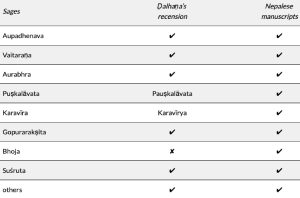
(Sages of the Suśrutasaṃhitā)
অন্য একটি বিষয়কে গবেষকেরা চিহ্নিত করেছেন – “Sixty methods of definitions”। নেপালি ভার্সনে ৬০টি সংজ্ঞার কথা বলা আছে। কিন্তু ডলহণের সংস্কারিত সুশ্রুত-সংহিতা-য় বলা আছে “sixty methods” তথা ৬০টি পদ্ধতির (ষষ্ট্যাবিধানৈঃ) কথা বলা আছে।[67]
এই প্রবন্ধের শেষে গবেষকেরা বেশ কয়েকটি প্রাসঙ্গিক প্রশ্ন রেখেছেন। আমি দীর্ঘ উদ্ধৃতিটি হুবহু তুলে দিচ্ছি – “Ḍalhaṇa knew a version of the Suśrutasaṃhitā that was similar to the Nepalese one or whether he knew of its readings through the work of earlier commentators. And if he knew of the Nepalese Suśrutasaṃhitā, why did he choose to prefer and comment on another version of the text? Was the Nepalese version less prevalent than other versions in the twelfth century or in the region he inhabited, or did he comment on the version taught to him by his guru? Or did he prefer an augmented version of the Suśrutasaṃhitā, or is his rendering of the text his own compilation of several different versions, which included one similar to the Nepalese? Perhaps further research on Ḍalhaṇa’s commentary and the complex history of the Suśrutasaṃhitā’s transmission will answer these questions.”[68]
উপরে উল্লেখিত গবেষকদের আরেকটি সম্মিলিত গবেষণাপত্রে এঁরা আরও কিছু বিষয়ের দিকে মনোযোগ আকর্ষণ করেছেন – (১) এঁদের বিবেচনায় নেপালি ভার্সন এবং ছাপা এডিশনের মধ্যে “most salient difference” হল, মূল আখ্যানে (frame story) নেপালি ভার্সনে কাশির রাজা দিবোদাসকে দেখা যায় সুশ্রুতকে শিক্ষা দিতে, যেখানে ছাপা এডিশনে দিবোদাসের স্থানে সবজায়গাতেই ধন্বন্তরিকে শিক্ষক হিসেবে বসানো হয়েছে, (২) ছাপা এডিশনে সমস্ত অধ্যায়ই শুরু হয় “যথোবাচ ভগবান ধন্বন্তরিঃ” দিয়ে, নেপালি ম্যান্সক্রিপ্টে এই বাক্যাংশ অনুপস্থিত, একমাত্র কল্পস্থান-এর প্রথম অধ্যায় ছাড়া, (৩) চক্রপাণিদত্ত (১০ম শতাব্দি) এবং ডলহণের সময়কাল (১২শ শতাব্দি) দিয়ে “this phrase had been moved to the beginning of the first book (সূত্রস্থান), thus casting Dhanvantari as the progenitor of Suśruta’s medicine.” (৪) কল্পস্থান-এর মনোযোগী পাঠে ধরা পড়ে “যথোবাচ ভগবান ধন্বন্তরিঃ” সম্ভবত প্রামাণিক (authorial) নয়, এই বাক্যাংশ সম্ভবত “added sometimes after this passage was initially composed because the narrative immediately reverts to Divodasa, the king who teaches Suśruta the art of protecting a king from poison”, (৫) নেপালি ম্যানাসক্রিপ্টের ৫ম স্থানে (কল্পস্থান) ধন্বন্তরির অন্তর্ভুক্তি “points to the rise of this sage’s status within Suśruta’s tradition during the ninth century”।[69]
য়ুজাস্তিক এবং অন্যান্যরা নেপালি ও সুশ্রুত-সংহিতা-র পরবর্তী অনুবাদসমূহের (versions) মধ্যে সূত্রস্থান-এর ১.১৬ অধ্যায়ের পার্থক্য নিয়ে মনোজ্ঞ এবং উদ্দীপক আলোচনা করেছেন।[70]
পরপর সাজালে মোটের ওপরে এঁদের যুক্তিগুলো এরকম – (১) ক্লেবানভ অধ্যায়সমূহের পর্যায়ক্রমের মধ্যেকার পার্থক্য নিয়ে আলোচনা এবং পর্যায়ক্রমের এই পার্থক্য কীভাবে “affect the overall organization and structuring of themes and elements of the text”[71] দেখিয়েছেন, (২) “The greater internal coherence of the Nepalese version”[72], (৩) “Transpositions” – গবেষকেরা দেখিয়েছেন নেপালি সংস্করণ (version)-এর ১৭ এবং ১৮ নম্বর শ্লোক যথাক্রমে ডলহণের সংস্করণে ২৬ এবং ২৫ নম্বর শ্লোক হয়েছে[73], (৪) “Changing Spelling, Sandhi and syntax”[74], (৪) “Technical Terms” – “Two examples of this in Suśrutasaṃhitā 1.16 are the terms for “joins” (बन्ध ) and “a slice of flesh” (वध्र ). The Nepalese version uses three terms for “joining” splits in the ear flaps and the flesh of nose (बन्ध, सन्धान, सन्धि). Redactors of subsequent versions appear to have tried to standardise this terminology by replacing सन्धान and सन्धि with बन्ध in prose passages.”[75] (৫) “Augmenting the Text” – ডলহণের সংস্করণে টেক্সটের বৃদ্ধি ঘটেছে একদিকে যেসমস্ত যৌগিক শব্দ বা পদ (compounds) আছে সেগুলোকে প্রসারিত করেছে এবং অন্যদিকে, নতুন যৌগিক ও শব্দ সন্নিবিষ্ট (inserting) করেছে[76] এবং, সর্বোপরি, (৬) “Transposing Words, Verse and Passages” – “A good example of this is the transposition of SS 1.16.17 and SS 1.16.18 in the Nepalese version to 1.16.26 and 1.16.25, respectively, in Ḍalhaṇa’s. It seems that this transposition may have resulted from the insertion of new verses 1.16.23cd–24 and 1.16.26.1–19 in the latter.”[77]
শেষের কথা
এতক্ষণ ধরে সমগ্র প্রবন্ধ জুড়ে টেক্সট-ক্রিটিকাল এডিশন এবং নেপালি ম্যানাসক্রিপ্ট আবিষ্কৃত হবার পরে বিশেষত সুশ্রুত-সংহিতা-র ক্ষেত্রে এই টেক্সট-ক্রিটিকাল এডিশনের ধারাবাহিক ক্ষেত্র নিয়ে যতদূর সম্ভব বিশদে আলোচনা করেছি। যদিও প্রবন্ধকে ভারাক্রান্ত করতে চাইনি বলে বহু অংশই আলোচনাও করিনি। এই আলোচনা থেকে কতকগুলো বিষয় নিশ্চয়ই পাঠকদের নজর এড়াবেনা – (১) এরকম একটি এডিশন তৈরি করা অত্যন্ত দুরূহ এবং শ্রমসাধ্য ব্যাপার। কোন একজনের পক্ষে এই কাজটি সমাধা করা প্রায় অসম্ভব একটি কর্ম। (২) এই কাজটি একটি ইন্টার-ডিসিপ্লিনারি বিষয়। সংস্কৃত জ্ঞান এবং আয়ুর্বেদের জ্ঞানের সঙ্গে palaeography, epigraphy, history, knowledge of Hindu calendar-কে জুড়ে নিতে হবে। (৩) আধুনিক হিসেব বলছে, এখন প্রায় ২৩০টি ম্যানাসক্রিপ্টের সন্ধান পাওয়া গেছে। এর মধ্যে কিছু ম্যানাসক্রিপ্ট অসম্পূর্ণ। তাসত্ত্বেও যাদবজি যতসংখ্যক পুথি ব্যবহার করেছিলেন তার প্রায় ২০ গুণ।[78] এর থেকে অনুমান করা যায় এই বিপুলসংখ্যক পুথির প্রতিটি শব্দ, শব্দার্থভেদ এবং লাইন ধরে ধরে পাঠান্তর বিচার করে সঠিক অর্থ, শব্দ এবং বাক্য নিরূপণ করা এক অতিমানবিক এবং অসম্ভব পরিশ্রমসাধ্য ও সময়সাপেক্ষ একটি কাজ – কার্যত বহু বছরের কাজ।
বাংলায় এই বিষয়ে, আমার জানার মধ্যে, কোন কাজ হয়নি। আমার সামগ্রিক আলোচনা সেই লক্ষ্যে একটি প্রাথমিক ও ছোট পদক্ষেপ মাত্র।
__________________________________________
[1] যশোদানন্দন সরকার, সুশ্রুত-সংহিতা, পৃঃ ৮৭।
[2] প্রাগুক্ত।
[3] Meulenbled, HIML, IB, p. 335, n. 334 – “Physicians accompanying the army on march are mentioned in Arthaśāstra (10.3.47).” – “Physicians with surgical instruments (śastra), machines, remedial oils, and cloth in their lands; and women with prepared food and beverage should stand behind, uttering encouraging words to fighting men.”
[4] Meulenbeld, HIML, IA, p. 221. চিকিৎসকদের বিভিন্ন ধরনের দণ্ডের ব্যাপারেও কৌটিল্যর অর্থশাস্ত্র আলোচনা করেছে – “Physicians undertaking medical treatment without intimating (to the government) the dangerous nature of the disease shall, if the patient dies, be punished with the first amercement (জরিমানা). If the death of a patient under treatment is due to carelessness in the treatment, the physician shall be punished with the middle-most amercement. Growth of disease due to negligence or indifference (karmavadha) of a physician shall be regarded as assault or violence.” – Kautilya’s Arthashastra, trans. R. Shamasatry, 1956, chapter 4, p. 28.
[5] মিলেনবেল্ডের নোট অনুযায়ী – “Likely to be poisoned are roads, water, shadows of trees, articles of food, fodder (যবস) and fuel (ইন্ধন).” মিউলেলেনবেল্ড বলছেন, ভল্লাতক বৃক্ষের ছায়া তক্ষণাৎ শোফ (swelling) তৈরি করে – HIML, IB, p. 335, n. 337. মনিয়ের-উইলিয়ামস ভল্লাতক-র মহাভারত এবং সুশ্রুত-সংহিতা-র রেফারেন্স দিয়ে পরিচয় হিসেবে বলছেন – “the Acajou (botanical name – Anacardium occidentale) or cashew-nut (from which is extracted an acid juice used for medicinal purpose, and a black liquid used for making linen).” – p. 748.
[6] Meulenbled, HIML, IA, p. 221.
[7] Ibid, p. 221.
[8] মহাভারত থেকে সূত্র দিয়ে মনিয়ের-উইলিয়ামস জানিয়েছেন, স্কন্ধাবার শব্দের অর্থ – “the king’s camp or headquarters, royal residence” – p. 1256. মিউলেনবেল্ড তাঁর নোটে বলেছেন ডলহণ একে কটক (“a royal camp” – Monier-Williams, p. 243) বলেছেন – মিউলেনবেল্ড, 1B, p. 335, n. 340.
[9] মিউলেনবেল্ড তাঁর নোটে জানাচ্ছেন – “A (soma-) sacrifice” – ibid, p. 335, n. 342.
[10] Meulenbeld, HIML, IA, p. 221.
[11] যশোদানন্দন, প্রাগুক্ত, পৃঃ ৮৭। আমি সাধু ক্রিয়াপদের পরিবর্তে আধুনিক ক্রিয়াপদ ব্যবহার করেছি।
[12] https://wayback.archive-it.org/all/20241119213757/https://sushrutaproject.org/
[13] S. M. Katre, Introduction to Indian Textual Criticism, 1941, p. 20.
[14] প্রাগুক্ত, পৃঃ ২০-২১।
[15] প্রাগুক্ত, পৃঃ ২১।
[16] প্রাগুক্ত, পৃঃ ২২।
[17] প্রাগুক্ত, পৃঃ ১০১-১২৮।
[18] প্রাগুক্ত, পৃঃ ৮৪।
[19] Sven Sellmer, “The Heart in the Ŗg-veda”, Studia Indololgiczne 2000, (7): 383-395.
[20] Ibid, p. 386.
[21] Philosophy and Medicine in Early Classical India – https://www.oeaw.ac.at/en/ikga/research/indology/concluded/philosophy-and-medicine-in-early-classical-india.
[22] https://www.oeaw.ac.at/en/ikga/research/indology/concluded/philosophy-and-medicine-in-early-classical-india.
[23] Phillip A. Maas, “On what became of the Carakasaṃhitā after Dṛḑhabala’s revision”, eJournal of Indian Medicine 2010, (3): 1-22.
[24] https://www.rarebooksocietyofindia.org/postDetail.php?id=196174216674_10154383576721675.
[25] Meulenbeld, HIML, IB, pp. 311-316.
[26] Dominik Wujastyk, “New Manuscript Evidece for the Textual and Cultural History of Early Indian Medicine, in Medical Texts and Manuscripts in Medical Culture, 2022, pp. 141-1677. Quotation on pp. 148-149.
[27] Wujastyk, ibid, p. 143.
[28] Wujastyk, Jason Birch, Andrey Klebanov, Madhu K. Parameswaran, Madhusudan Rimal, Deepro Chakraborty, Harshal Bhatt, Vandana Lele, Paras Mehta, On the Plastic Surgery of the Ears and Nose: The Nepalese Version of the Suśrutasaṃhitā, 2023 (Hereafter The Nepalese Suśrutasaṃhitā), p. 29.
[29] Ibid, p. 30.
[30] Dragomir Dimitrov and Kashinath Tamot, “Kaiser Shamsher, His Lirary and His Manuscript Collectionhttps”, Newsletter of Nepal-Gerrnan Manuscript Preservation Project (NGMPP) 2007, pp. 26-36. https://panditproject.org/entity/111129/print.
[31] Kengo Hrimoto, “Nepalese Manuscripts of the Suśrutasaṃhitā”, Journal of Indian and Buddhist Studies 214, 62 (3): 1087-1093.
[32] প্রাগুক্ত, পৃঃ ১০৮৮।
[33] প্রাগুক্ত, পৃঃ.১০৮৮-৮৯।
[34] প্রাগুক্ত, পৃঃ ১০৯০।
[35] প্রাগুক্ত, ১০৯০।
[36] Moriguchi Mai, “The Clinical Viewpoint in the Structure of the Suśrutasaṃhitā”, Journal of Indian and Buddhist Studies 214, 62 (3): 1094-1100. Quotation on p, 1095.
[37] Dominik Wujastyk, “New Manuscript Evidence for the Textual and Cultural History of Early Classical Indian Medicine”, in Medical Texts and Manuscripts in Indian Cultural History, edited by Dominik Wujastyk, Anthony Cerulli, and Karin Preisendanz, 2013, pp. 141–57. Quotation on p. 143.
[38] https://saktumiva.org/wiki/wujastyk/susrutasamhita/start.
[39] https://sushrutaproject.org/2025/02/25/intertextuality-and-the-methods-of-diagnosis/.
[40] Kengo Harimoto, “In Search of the Oldest Nepalese Manuscript”, Rivista degli Studi Orientali, Nuova Serie 2011, (84): 85-106.
[41] Ibid, p. 102.
[42] Ibid, p. 102.
[43] Ibid, p. 103.
[44] Ibid, p. 104.
[45] Ibid, p. 104.
[46] Andrey Klebanov, “On the Textual History of the Suśrutasaṃhitā (1): A Study of Three Nepalese Manuscripts”, eJournal of Indian Medicine 2021, (21): 1-64. Quotation on p. 42.
[47] Ibid, pp. 52-55.
[48] Ibid, p. 55.
[49] প্রাগুক্ত, পৃঃ ৩২।
[50] প্রাগুক্ত, পৃঃ ৩৬।
[51] প্রাগুক্ত, পৃঃ ৩৬, পাদটীকাঃ ১৩৫।
[52] পাগুক্ত, পৃঃ ৩৭।
[53] প্রাগুক্ত, পৃঃ ৪৪।
[54] প্রাগুক্ত, পৃঃ ৪৯-৫২।
[55] প্রাগুক্ত, পৃঃ ৫৭।
[56] প্রাগুক্ত, পৃঃ ৮।
[57] Wujastyk, “New Manuscript Evidence for the Textual and Cultural History of Early Classical Indian Medicine”, ibid, p. 147.
[58] Ibid, p. 147.
[59] প্রাগুক্ত, পৃঃ ১৫১।
[60] প্রাগুক্ত, পৃঃ ১৫৩।
[61] Dominik Wujastyk, Jason Birch, Andrey Klebanov, Madhu K. Parameswaran, Madhusudan Rimal, Deepro Chakraborty, Harshal Bhatt, Vandana Lele, On the Plastic Surgery of the Ears and Nose: The Nepalese Version of the Suśrutasaṃhitā, 2023. Hereafter The Nepalese Suśrutasaṃhitā. পূর্বে উল্লেখিত হয়েছে।
[62] The Nepalese Suśrutasaṃhitā, p. 42.
[63] Birch, Wujastyk, Klebanov, Rimal, Chakraborty, Bhatt and Lele, “Ḍalhaṇa and the Early ‘Nepalese’ Version of the Suśrutasaṃhitā”, Academia Letters October 2021, Article 3733. https://doi.org/10.20935/AL3733.
[64] প্রাগুক্ত, পৃঃ ২।
[65] প্রাগুক্ত, পৃ ৩।
[66] প্রাগুক্ত, পৃঃ ৪।
[67] প্রাগুক্ত, পৃঃ ৪-৫।
[68] প্রাগুক্ত, পৃঃ ৫।
[69] Wujastyk, Birch, Klebanov et al, “Further Insight into the Role of Danvantari, the physician to the gods, in the Suśrutasaṃhitā”, Academia Letters August 2021, Article 2992, https://doi.org/10.20935/AL2992.
[70] Wujastyk, Birch, Klebanov et al, The Nepalese Suśrutasaṃhitā, pp. 16-24.
[71] Klebanov, “On the Textual History of the Suśrutasaṃhitā (1)”, p. 27.
[72] Wujastyk, Birch, Klebanov et al, The Nepalese Suśrutasaṃhitā, p. 16.
[73] প্রাগুক্ত, পৃঃ ১৮।
[74] প্রাগুক্ত, পৃঃ ১৯।
[75] প্রাগুক্ত, পৃঃ ২০।
[76] প্রাগুক্ত, পৃঃ ২১।
[77] প্রাগুক্ত, পৃঃ ২২।
[78] প্রাগুক্ত, পৃঃ ২৯-৩০।





Khub sunder lekha sir🙏🏼
এক কথায়, অসাধারণ এক আলোচনা। যদিও আমার বিষয়জ্ঞান নগণ্য এবং ভাষাজ্ঞান সীমিত, তবুও আলোচনার অনেকাংশ হয়তো বুঝতে পেরেছি।
এমন আলোচনা আপনিই করে আমাদের কাছে অনেকটাই বোধগম্য করতে পারেন। ধন্যবাদ ডঃ জয়ন্ত।
অসাধারণ। আর ভাষা নেই ব্যক্ত করার